Monday, June 7, 2010

The Jones Farm and The Livingston Backus House Make Marmalade & Illustrate Historic Differences

This year at the Jones Farm and the Livingston-Backus house we are interpreting both around 1850 in order to show the contrast between the two buildings and their inhabitants.

The Jones Farm is a rural farm and farther from a market than the Livingston-Backus House. While they live above the subsistence level, they are not as well-to-do as the Livingston-Backus household and serve simple farm fare that they make themselves.

Recent Fare at the Livingston-Backus House
The Livingston-Backus House's original location was on the Erie canal. Not only does this make it easier to come by many different ingredients, it is also a household of higher financial standing. They would have had servants to do the cooking and would have done more entertaining.

As an example of the difference between the dwellings, our Historic Foodways staff have researched marmalade two ways. In the first recipe by Miss Isabella Beeton, rhubarb is used to economize on the cost of the expensive oranges while still keeping the nice orange flavor of "real" Scottish marmalade. Apparently the best orange marmalade to be had mid-century was from Scotland, and Mrs. Beeton's was intended "to resemble" it, at least in flavor. Calling it Scotch marmalade is sort of a play on words too. This is the marmalade that we will be making at The Jones Farm.

Rhubarb and Orange Jam, to resemble Scotch Marmalade.
The Book of Household Management 1859-61 by Mrs. Isabella Beeton

1 quart of finely-cut rhubarb
6 oranges
1–1/2 lb. of loaf sugar.

Peel the oranges; remove as much of the white pith as possible, divide them, and take out the pips; slice the pulp into a preserving-pan, add the rind of half the oranges cut into thin strips, and the loaf sugar, which should be broken small. Peel the rhubarb, cut it into thin pieces, put it to the oranges, and stir altogether over a gentle fire until the jam is done. Remove all the scum as it rises, put the preserve into pots, and, when cold, cover down. Should the rhubarb be very old, stew it alone for ¼ hour before the other ingredients are added.

The Livingston-Backus house will feature a marmalade made entirely from oranges, being that they are considered expensive, and a luxury.

Orange Marmalade
Miss Leslie's new cookery book, 1857
By Eliza Leslie

Quarter some large ripe oranges, and remove the rind, the seeds, and the strings or filaments, taking care to save all the juice. Put the pulp, with the juice, into a porcelain kettle, and mix with it an equal quantity of strained honey, adding sufficient powdered loaf sugar to render it very thick and sweet. The honey alone will not make it sweet enough. Boil it uncovered, and skim it till very thick, smooth, and clear. Taste it, and if necessary add more sugar, and boil it longer. When cold, put it up in tumblers or white-ware marmalade pots, and cover it securely. This marmalade is exquisite, and very superior to any other.

This weekend you will be able to taste the "Scotch Marmalade" at The Jones Farm.

Sunday, June 6, 2010

Laura Ingalls Wilder Biographer William Anderson to Participate in Our Life & Times of Laura Ingalls Wilder Event

long with Dean Butler, we have another exciting announcement to make regarding our Life and Times of Laura Ingalls Wilder event August 7th and 8th.

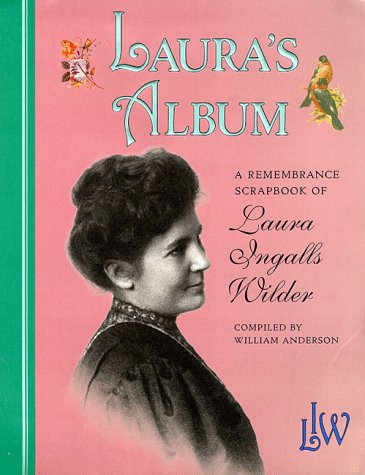
Award winning historian , Laura Ingalls Wilder scholar, author and noted speaker William Anderson will also be delivering a presentation and be on hand to sign books.

This is particularly exciting because up until now the event has featured only guests involved with the 1970's TV show Little House on The Prairie, based on the series of books by Laura Ingalls Wilder.

Anderson's inclusion in the program provides a new layer of depth that will be exciting and enriching for all Laura Ingalls Wilder Fans. Those already familiar with the original 9 books will appreciate the additional insight Anderson provides on these well-loved books. Those who have only known her through the TV series will be delighted with a new level of understanding of this 19th century icon.


While a student at Michigan's Albion College, Anderson's summer job as a tour guide for the Laura Ingalls Wilder Memorial Society in De Smet, South Dakota, included preservation work and research. He founded the newsletter Laura Ingalls Wilder Lore, which he still edit and is also the director of the Laura Ingalls Wilder Home Association in Mansfield, Missouri.

He is the author of 13 books about Laura Ingalls Wilder and her family

Thursday, June 3, 2010

Six weeks of Want-Cup Cake aka 1234 Cake

As our six weeks of want comes to an end with the advent of new spring vegetables, I leave you with a simple cake that would have been useful for using up the butter and eggs that you would have been blessed with at this time of year.

In the village (and elsewhere) it is sometimes known as a 1234 Cake and you'll soon find out why.

In old cookbooks it is referred to as a Cup Cake.

Ingredients
1 Cup Butter
2 Cups Sugar
3 Cups Flour
4 Eggs

Mix together and pour into a pan and bake for an hour at 350 degrees. You can add any flavoring you wish to this and while it's nice served with fruit it is perfectly acceptable on it's own.

In the Livingston-Bakus house it was made a few weeks ago in the brick oven. To use a brick oven a fire is started in it which burns for approx 3 hours to achieve the correct 350 temp to bake with. The fire is then removed entirely as the bricks are hot enough to bake the cake on their own.

People today are still making the Cup Cake (1234 Cake). It is almost laughable that chefs from Paula Deen to Alice Waters, have versions of the 1234 cake in their cookbooks as it's a well known old fashioned recipe!

Note-This weekend in the Livingston-Bakus Kitchen we will be doing a tasting for visitors of rice pudding, another way in which cream and eggs would have been used at this time of year.

Stuart's Musing- Creating the Brewery at the Museum

Recently I had the pleasure to interview Stuart Bolger, Director Emeritus of the Genesee Country Village & Museum. The content of our discussion will be the subject of a number of posts in the upcoming weeks.

Stuart is a fascinating man, hired in 1966 by Jack Wehle, the founder of the museum, to lead the creation of the village. He was educated at both the University of Rochester and Harvard, served in the Marine Corps in the Pacific in WWII and spent 8 years in the restoration of 18th century Moravian buildings in Pennsylvania before beginning his nearly 45 years at the museum!

Each week he regales staff members with excerpts from The Genesee Farmer or what's come to be known as "Stuarts Musings," short paragraphs about local history, the museum or both!

As we approach the grand re-opening of our brewery, Stuart remembers back to the creation of the building back in the 1970's!

Let the lager flow!

With preparations ongoing to convert the Museum’s Brewery from an interesting exhibit to a functioning facility, we might briefly review how it all came about.

By the mid-1970s the Village layout included a church, a schoolhouse, a store, an inn, and a blacksmith shop—features common to any hamlet worth its salt—plus half a dozen tradesmen’s shops and offices for two important professionals, the doctor and the lawyer. But no brewery.


A brewery! Why not? Well, both Mumford and Caledonia boasted breweries early on. However no trace remained of either for us to rescue and haul in. But we discovered an account of one in Geneva. In 1803, Lord Selkirk was checking out industries in the young nation. The observant Briton left a sketch and a detailed description of Hall’s brewery.

This evidence was good enough for the Museum’s founder, who himself knew something about the brewing industry.
There was an obsolete brewing kettle moldering away at his plant on St. Paul Street. An abandoned house near West Bloomfield provided hewn framing timbers; planks from a dismantled house on Clinton Avenue; and building stones from what was left of the Enright Brewery on Water Street in downtown Rochester.

These were knit together to form a convincing replica of an early 19th Century brewhouse. A masonry furnace was built to heat the old brew kettle.
Alfonso Lang, chief cooper at the Genesee Brewing Company, fashioned wooden mash tuns, wooden troughs, fermenters, casks, cooling ships, and wooden tools to agitate the mash. Huge hogsheads (the oversize barrels which Louis Wehle long ago had imported from the old country) rested on racks on the ground floor, representing aging vessels for the finished product. Half and quarter size beer barrels were stacked nearby. On the main floor was the brewmaster’s office, but he never brewed any beer. Now that is about to change.

A fire in 1988 burned everything of wood above the ground floor. It was quickly rebuilt. Timbers were drawn from the Museum’s stockpile, wood sheathing and planks were donated by the Yansic Lumber Company in Arcade, and carpenter Bob VanHoute rebuilt the brew house. (The furnace and brew kettle had survived.). There was no Alfonso to replace the wooden equipage. A cooper in Rushville, NY, who worked for the Finger Lakes wineries, spent several weeks reproducing the fire-destroyed reproductions.


Note, we now have village coopers who have provided many barrels for our current brewery.

Wednesday, June 2, 2010

Almanzo Wilder is Coming to Town! Dean Butler to Visit Genesee Country Village & Museum


We are pleased and proud to announce that this year, for our Life and Times of Laura Ingalls Wilder event, we will be hosting Dean Butler for our celebrity talk.

Dean, is most widely known for his role as Almanzo Wilder, Laura Ingalls Wilder's husband on the TV show Little House On The Prairie.

Butler is also the the executive producer for Legacy Documentaries, a film company which has which has produced, among many other historic documentaries, a documentary about Almanzo Wilder, Almanzo Wilder, Life Before Laura as well as the soon to be released documentary, Little House On The Prairie, The Legacy of Laura Ingalls Wilder.


Dean will be speaking about his time on the television series as well as his interest in both the real life Laura and Almanzo Wilder. He will also be avaliable to sign autographs.

Dean has a blog!

The Life and Times of Laura Ingalls Wilder event will take place
Saturday & Sunday, August 7-8, 10 a.m. - 5 p.m

Tuesday, June 1, 2010

Opening The Root Cellar at The Pioneer Farmstead

Before Opening
Want to see what we found in the root cellar?

On opening day at the museum we opened the root cellar at the Pioneer Farmstead after a long cold winter. We were excited and anxious to see how our vegetables had fared. This is our 5th year with a root cellar and each year our results have gotten better. The first year there was absolutely nothing at all in the cellar when we opened it. And no trace of anything either!

We've improved our technique over the years by adding wood walls and a french drain of stones in the bottom.

This year we had an impressive array of beets, turnips and parsnips but lost the carrots. In another cellar we had cabbages and onions. Those are separated from the other vegetables as they give off a gas that will break down the other vegetables quickly.

Each cellar would have provided vegetables for a family for about a month and a typical family would have 4 or 5 of such cellars around their property. The best ones would have been built into the side of a hill if possible.

Even in the 85 degree weather that we had last week, when we peeked into the cellar it was still markedly cooler than the air above it.
In the cellar

One thing to note that while the vegetables have stayed quite well over the winter, they need to be used immediately after being taken from the cellar or they begin to get soft very quickly.

Waiting to be used in the Pioneer Farmstead

Monday, May 31, 2010

Salt Glazed Stoneware Made In The Village

At the Flint Hill Pottery, one type of Stoneware that our resident potter, Mark Presher creates is salt glazed stoneware.

The unique characteristics of salt glazing were discovered in the Rhineland in Germany during the 14th century. The salt reacts and forms a shiny glazed surface without an additional glaze to accomplish it. The German stoneware was also characterized by the use of a cobalt oxide based colorant for decoration. This process and type of stoneware made it's way to the Genesee region with the completion of the Erie Canal.

The stoneware in the Northern United States is very distinctive as it bears close resemblance to the German stoneware that it is descended from. The pottery in the Genesee region is further distinctive as it tends to have more intricate designs than in other regions. Often, when making many of the same items, the design was used as a way to set yourself and your work apart from your competitor.

Mark makes traditional salt glazed stoneware in the village pottery and decorates it with a typical 2 dimensional design that would have been popular in the 19th century. He creates pieces for use in the village and also for sale in our gift shop. He has recently designed a new growler and beer mug to commemorate our new 1803 Fat Ox Ale.

We also have a documentary featuring Mark which details the process of making stoneware in the 19th century as well as about the life of the potter, entitled, "The Potter's Fire."

Here is a short clip to enjoy!